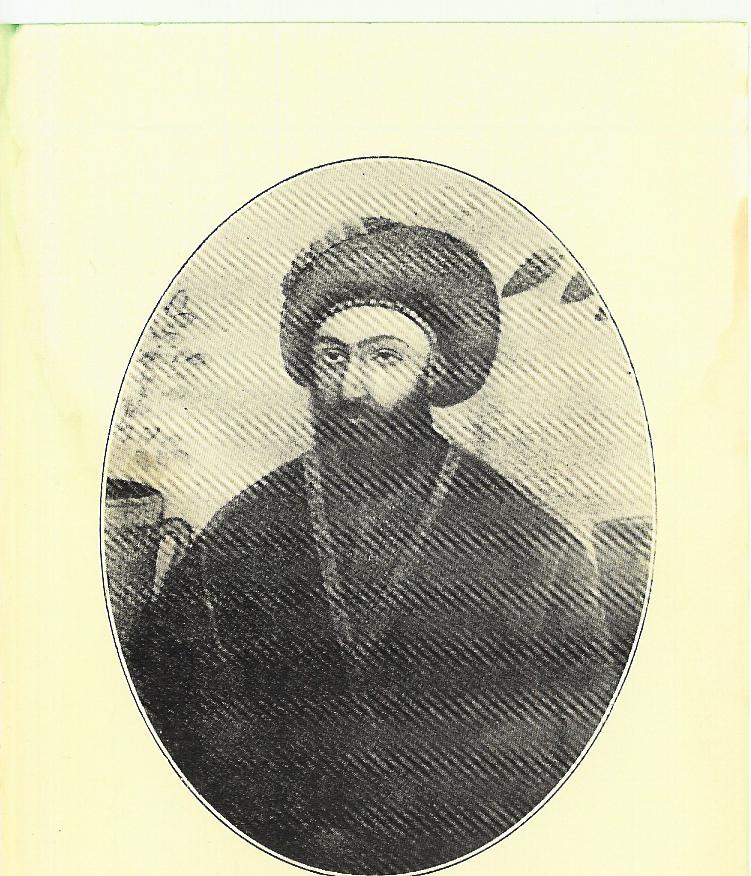
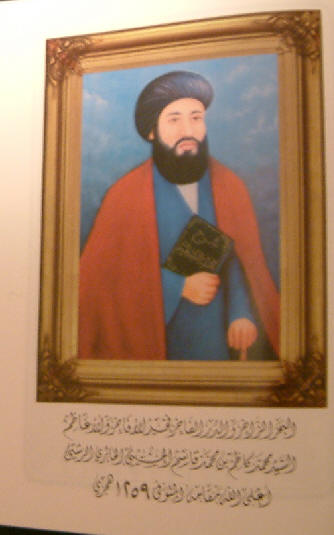
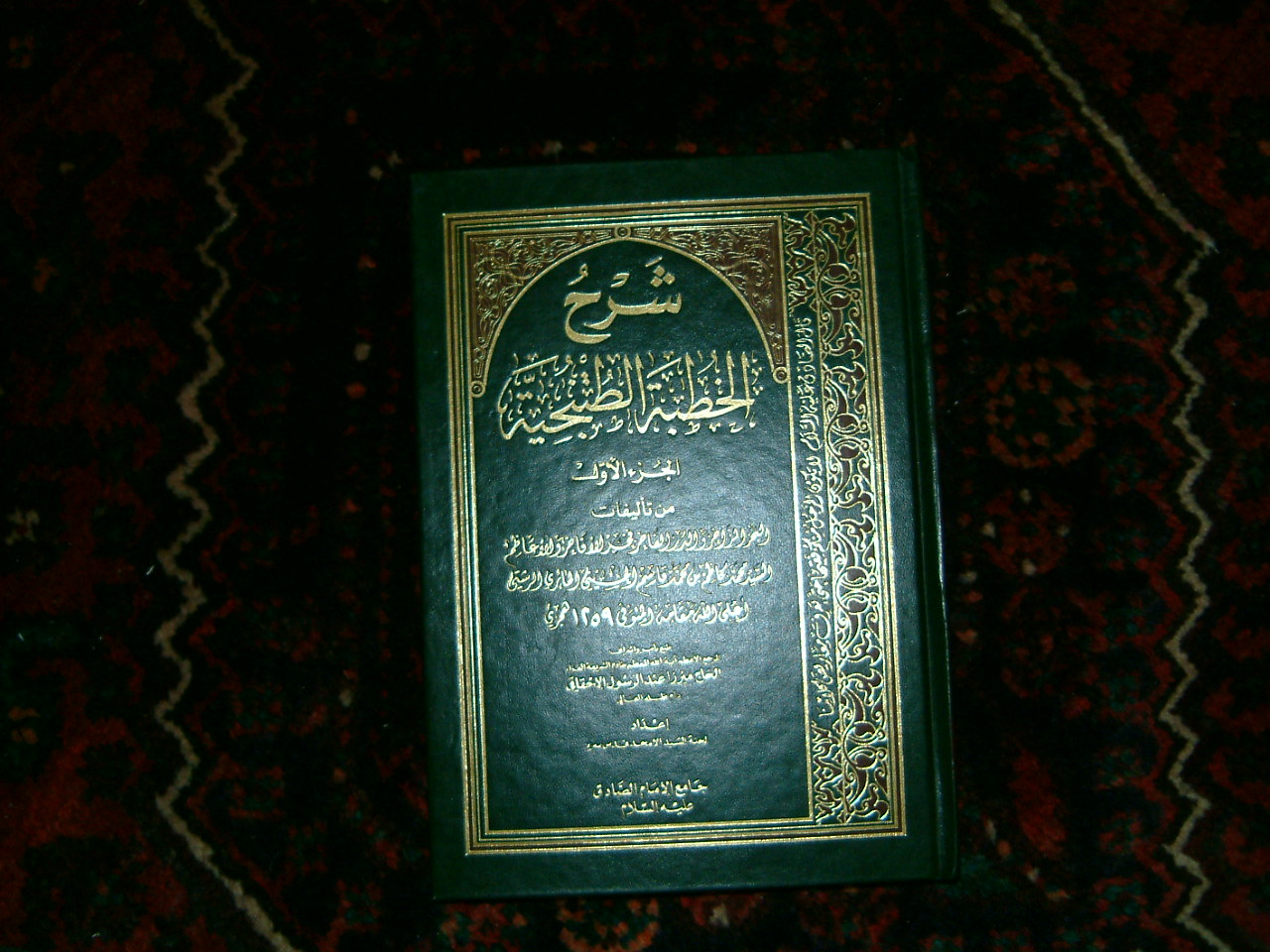
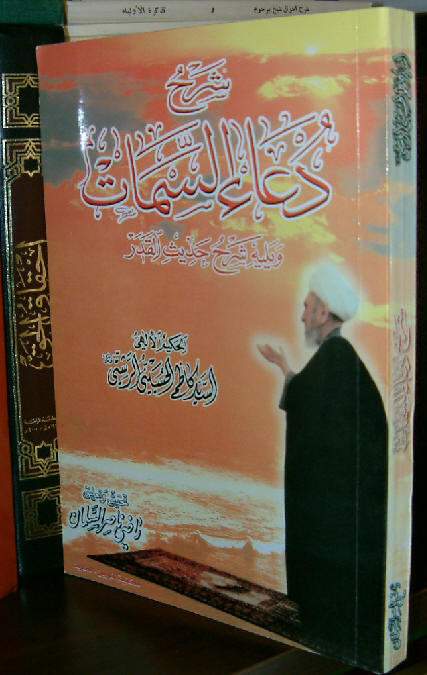
(The Commentary upon
the Prayer of the Signs)
شرح
دعاى
السمات
وحديث القدر
(Commentary upon the Prayer of the Signs and the Ḥadīth
regarding Destiny)
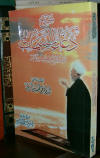
1350 verses in length. Old lithograph edition.
Above is a picture of the new 2002 printing (see below).
Dated 15th Sha`bān 1238 = 27th April 1823. Written in Kufa
A treatise was written in reply to Ākhūnd Mullā `Alī Asghar
Nīshāpūrī which Ibrahami characterizes as "redolent of mysteries (asrār)
and much Wisdom (ḥikmat)". Consisting of 1350 verses. There exists an old
printing. Original mss. unavailable.
Kirmānī
mentions that this medium length work of 1350 verses was written in reply to Mullā `Alī Asghar Nīshāpūrī on 15th Sha`ban 1238 (27th April 1823) in Kufa
about a portion of the well-known Du`a-yi simāt, the supplication or
`Prayer of the Signs'. In his opinion it is a work replete with "weighty
mysteries and philosophical wisdom" (Fihrist, No. 144 p. 292).
Kirmānī
again mentions that the original mss. of this work is lost and refers to
the existence of an old (lithograph?) printing (chap qadīm) (ibid.).
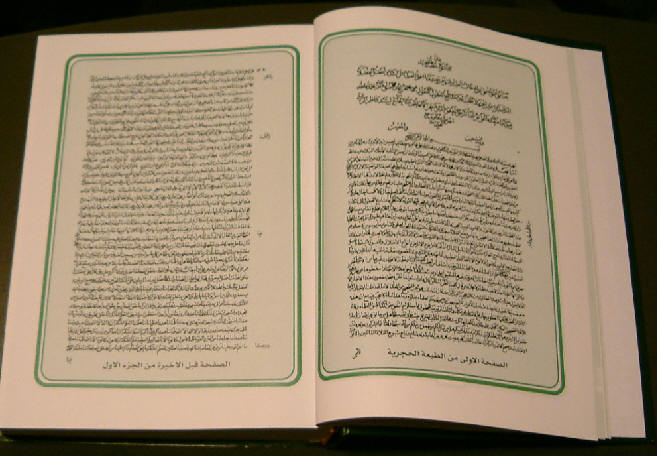
A very recent
printing of this work is within the paperback volume of the `Divine wise one',
Sayyid Kāẓim al-Ḥusaynī al-Rashtī
شرح دعاء
السمات
ويليه شرح حديث القدر
(Sharh du`a'
al-simāt wa yalayihi
Sharḥ
ḥadīth al-qadr). Beirut: Mu`assat Fikr al-Awḥad, [14th Rabi` al-Awwal] 1423/
[26th May] (Syria [Damascus] al-Sayyida Zaynab). 2002. This printing appears to
have been expertly made from
various original mss. (see pp.24-29, first and last pages
are reproduced here) as edited and introduced by Raḍī Nāṣir al-Salmān. It is
printed along with an edition of Sayyid Kāẓim's brief `Commentary upon the Ḥadīth of
al-Qadr' (Power, Destiny) which occupies (with its introduction) pp.
287-298.
In this printing the
general or editors introduction occupies pp.1-36 ADD HERE.
The text of the Sharḥ du`a al-simāt commentary occupies
pp. [37] 41-385. The text of the 'Prayer of the Signs' is divided into 72
portions and commented upon in some detail. ADD
The Arabic text of the
Du`a'
al-simāt exists in various versions
or recensions which are believed to go back to the fifth and sixth Imams,
Muhammad al-Baqir ( d. c.126/743) and Ja`far al-Sadiq (d. c 48/765). It has
been variously transmitted and reproduced in such works as the al-Misbāḥ al-mutahajjid
al-kabir (The Greater Luminary of the Pilgrim..) of Nasir al-Din al-Tusi
(d.460/1067) and the Jamāl al-usbū` (Beauty of the Week) of Raḍī
al-Dīn Ibn Ṭāwūs (d. 664/1226). As transmitted
and commented upon by SKR in
the the abovementioned edition of the Du`a'
al-simāt, the prayer opens with the
basmala
بسم الله
الرحمن الرحيم
and continues with reference to the Greatest Name of God as
follows:
اللهم إني أسألك باسمك العظيم الأعظم
الأعز الأجل الأكرم الذي
إذا
دعيت به على مغالق أبواب السماء للفتح بالرحمة
"O my God! I, verily, beseech Thee
by Thy Mighty, Mightiest, Most Powerful, Most Glorious, Most Gracious Name
which, when I supplicate [Thee] therewith, that the strongly-bolted portals of
the Gates of Heaven might, through [Thy] Mercy, be opened up....
The Du`a simāt a
few paragraphs into this supplication interestingly echoes a biblical
verse in the book Deuteronomy, chapter 33 verse 2
and is an important example of Shi`i Islamo-biblical gnosis: ADD
Echoing various verses of the
bible one version of the Du`a simāt
commences
as follows:
CHECK TEXT AND REMOVE ERRORS..
وأسألك اللهم بمجدك
الذي كلمت به عبدك ورسولك موسى بن عمران في المقدسين فوق إحساس الكروبين، فوق
عمائم النور فوق تابوت الشهادة في عمود النور وفي طور سيناء وفي جبل حوريث في
الواد المقدس في البقعة المباركة من جانب الطور الأيمن من الشجرة وفي أرض مصر
بتسع آيات بينات، ويوم فرقت لبني إسرائيل البحر وفي المنبجسات التي صنعت بها
العجائب في بحر سوف وعقدت ماء البحر في قلب الغمر كالحجارة وجاوزت ببني إسرائيل
البحر وتمت كلمتك الحسنى عليهم بما صبروا وأورثتهم مشارق الأرض ومغاربها التي
باركت فيها للعالمين وأغرقت فرعون وجنوده ومراكبه في اليم،
I beseech Thee, O my God! by Thy Glory (majd) through which Thou did converse with Thy servant and Thy
messenger Moses son of `Imrān in the sanctified [Sinaitic] regions (al-muqaddisīn) beyond the ken of the cherubim (al-karūbiyyin), above the clouds of Light beyond the Ark of the Testament (al-tābūt al-shahāda) within the Pillars of Light, And in Mount Sinai (tur sina') and Mount Horeb (jabal al-hurib) in the sanctified Vale (al-wad al-muqaddas), in the Blessed Spot (al-buq'at al-mubaraka) in the
direction of the Mount (al-tur) situated at the right-hand side of the Bush [Tree]. And likewise [ he conversed] in the land of Egypt
through nine Luminous Verses (āyāt bayyināt). And He separated the [Red] Sea for the children of Israel.. .... ADD.
No. 13 (= No. 145, Fih.
292)
The Prayer commented upon begins, " ADD
Mentioned in the Fihrist of SKR.
Autograph mss. unavailable.
No. 14
(= No. 146, Fih.
293)
On how the mashiyyat-i
kulliyya ("Univesal Will") could be dahriyya (time bound) or sarmadiyya
(eternal-perpetual) since such is the Muhammadan Reality (haqiqat-i
Muhammadiyya), may be blessings of God be upon his companions.
480 verses in length. Autograph mss. unavailable.
No. 15 (= No. 147, Fih. 293)
1940 verses in length. Ms. "B-5" is
extant.
No. 16
(= No. 148, Fih. 293)
This item is
mentioned in the Fihrist of Sayyid Kazim.
No
autograph ms. exists.
No. 17
(= No. 149, Fih. 293)
شرح قصيده
لاميه عبدالباقى افندى
(Commentary upon the Ode rhyming in [the letter]
ل
"L" of `Abd al-Bāqī Āffindī Mawṣūlī )
Kirmānī in his Fihrist (= No.
149 p. 293) states that the original, 16,000 verse mss. is unavailable but
refers to the old lithograph printing which is presumably the very rare [Tabriz] n. p., 1270/1853
(see above). Sayyid Kāẓim's
lengthy and deeply theological Sharḥ al-qaṣīda al-lāmiyya
is an Arabic commentary upon an Arabic ode rhyming in the letter
ل ("L") composed by `Abd al-Bāqī
Effendī Mawṣūlī (of Mosul, d. ADD). The qaṣīda al-lāmiyya upon which Sayyid Kazim was
written in celebration of .. ADD
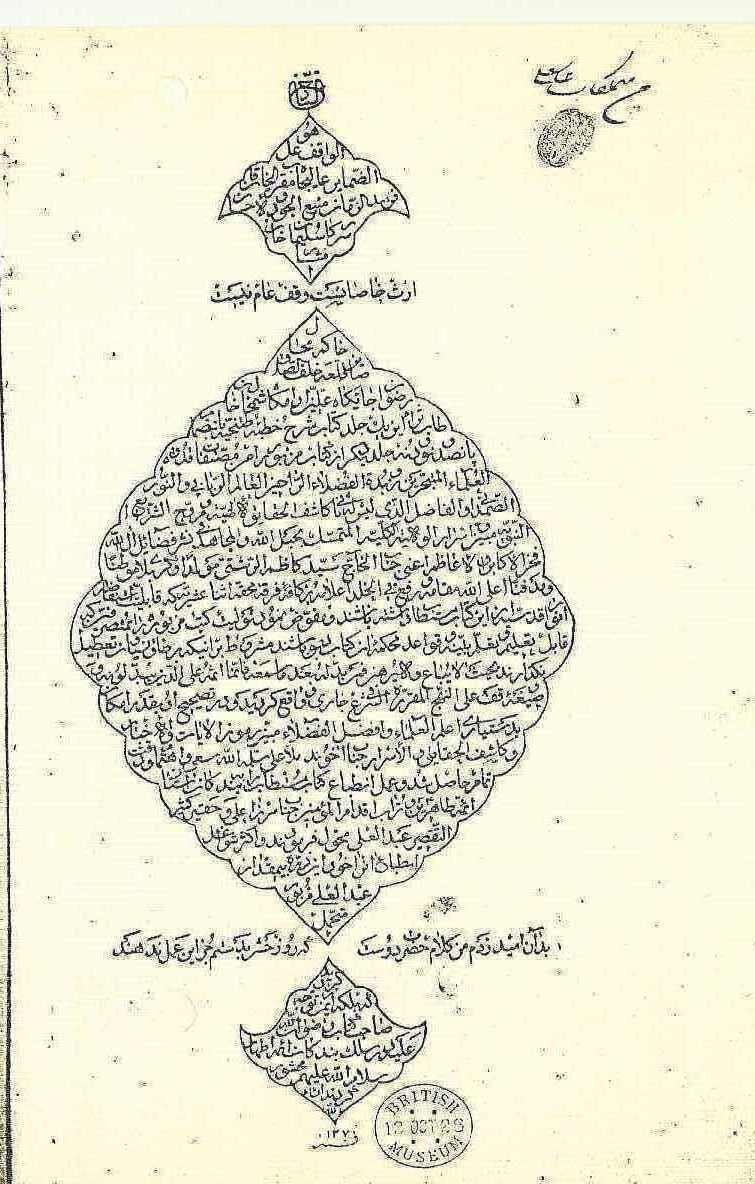
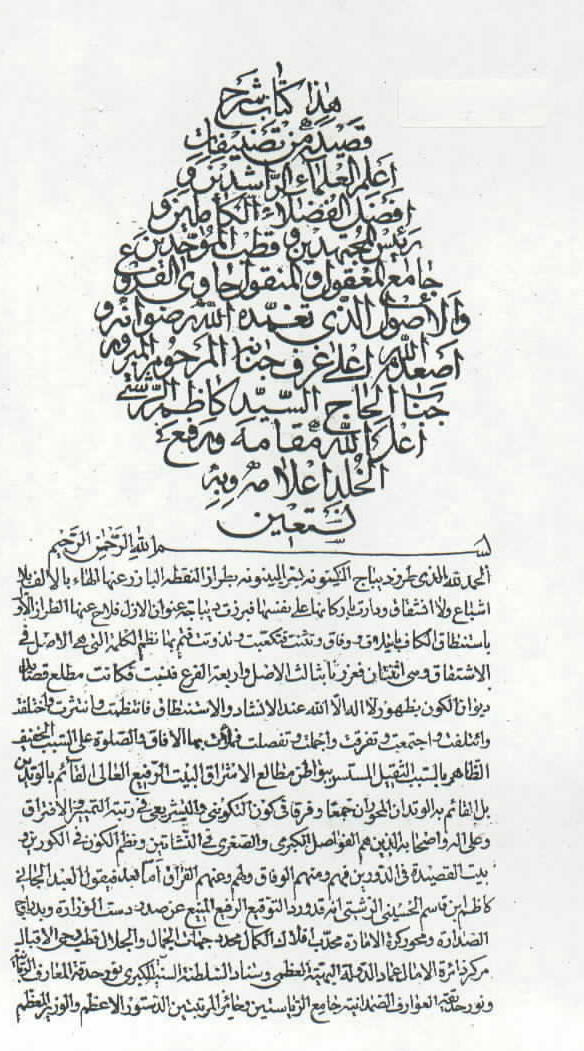
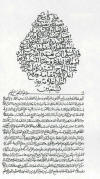
In the Name of God, the Merciful, the
Compassionate
Praise be to God who ornamented the brocade
of existence with the mystery of differentiation (sirr al-baynūnat) by
virtue of the ornament (ṭirāz) of the emergent Point (al-nuqṭat al-bāriz,
at the base of the letter "B" =
ب ) from which
comes the letter "H" (al-hā' =
ه ) through the letter "A"
ا (bi'l-alif) without
filling up (ishbā') or segregation (inshiqāq)....
Above is a translation from the scan of the opening page of a lithograph edition
of the Sharḥ al-qaṣīda al-lāmiyya. Its opening lines following the
basmala (click on
the image to make it clearly visible), it might be noted here, have been interpreted by
the Baha'i prophet Bahā'-Allāh
(1817-1892)
in a Tablet to Mullā `Alī Bajistānī (cited Ma'idih 7:139) and
by his son
`Abd al-Bahā' in his Tafsir on the basmala as a
cryptic, acrostic spelling out the Arabic word bahā' (=
B
ب
+ H
ه +
A I [+
ء
=
hamza ],
conjoined spelling =
بهاء
bahā'= "splendor", "glory", "beauty, etc)
which they
viewed as the quintessence of the al-ism al-a`zam, the Mightiest
or Greatest Name of God. This paragraph is viewed by Baha'is as a prophetic
intinmation of the person and title of Mirza Husayn `Ali Nuri entitled Baha'-Allah
(the Splendor of God).
The 5th (Kirmani) Shaykhī leader Hajjī Zayn al-Ābidīn Khān Kirmānī
(1276-1360/1859-1942), has also commented on the opening of the Sharḥ al-qaṣīda al-lāmiyya
of Sayyid Kāẓim Rashtī in his Arabic Sharḥ al-khuṭba min sharḥ al-qaṣīda
which is dated 19th Rajab 1336 / 30 April 1918. This 227 page work was
first printed, Kirman: Maṭba`ah al-Sa`ada. n.d. [197?/8?].
No. 18 (= No. 150, Fih. 294)
(Commentary upon the
alchemical Ode rhyming in [the letter]
ب "B"
of `Alī ibn
Mūsā al-`Andalusī.
300 verses in length. Ms./ Khaṭṭī extant. No autograph
ms. exists.
Dated 14th Shawwal 1239/ 12th June 1824 and [written] in
the village of Mārwān, one of the villages of Hamadan.
Relating to the
science of alchemy (`ilm al-kimiya') the ode commented upon begins:
"Take the Reddish Egg (al-baiḍā' al-shuqrā') and remove its
shell.
For
it there be a quintessence [core] (lubāb an)
beneath that shell".
No. 19 (= No. 151, Fih. 294)
`Some Comments on the Treatise exposing Husaynid Brilliances'
written at the request of Ākhund Mullā Mashhad.
The work commented upon is 8700 verses in length In
exposition of the levels of existence incorporating the [imamological]
hikmat of the family of God (āl Allāh). See below No. 31 Risāla Lawāmi` al-Ḥusayniyya.
The Commentary is 230 verses in length. A Ms. (khaṭṭī)
is extant. No autograph
ms. is known.
No. 20 (= No. 152, Fih. 294)
Add here.
300 verses in length. Old Lithograph printing. No
autograph ms. unavailable.
No. 21 (= No. 153, Fih. 294)
360 verses in length. Old Lithograph printing. No
autograph ms. unavailable.
This treatise is about the meaning of the noble hadith
transmitted by Amir al-Mu'minin, Imam `Alī (d. 40/661) upon him be peace, in
response to a question commencing, "`How does one see a man (rijal an)
in the world (al-dunyā')? And he, upon him be peace, replied, "I saw a man (rijal
an) and I asked that very one, and he replied, "Before him is
thee!". And he responded, "I am but clay (al-ṭīn)".
No. 22 (= No. 154, Fih. 295)
Risāla in reply to the [11 or so] questions of
one of the people of Jabal `Āmil [in Lebanon]
570 verse. Autograph mss. unavailable. Old Lithograph edition (chāp-i qadīm).
Q. 1. If it sound (ṣaḥīḥ) to
believe that the basis of the createdness of a person is from Sijjīn?
Add here
Q. 2. On the meaning of Rabb
("Lord") and His marāṭib ("levels").
Q. 3. On the meaning of the
noble hadith (tradition), "The people are asleep and when they dies they
awaken"
Q. 4. On the difference between
the people of bāṭin (deep gnosis) with respect to reality (haqq) and
error (bāṭil).
Q. 5. About the meaning of
kabid-i thur ("The liver of the ox"/ "zodiacal centre of Taurus") and kabid-i hawt
("The liver of the fish"/ `Zodiacal centre of Pisces").
Q. 6. On the meaning of the
noble hadith (tradition), "Everything that is in the Qur'ān is in the
Ḥamd [1st Surat al-Fatiha] and all that is in the Ḥamd is in the basmala
Q. 7. On the meaning of the
noble hadith (tradition), "For us [Imams] there are conditions-states (ḥālāt)
of being with God. He is in them as us and we are in them as Him except
that He is He and we are we".
Q. 8. On the meaning of the
noble hadith (tradition), "Servitude (al-`ubūdiyya) is a essence (jawhara)
the substance (kuhn) of which is Lordship (rubūbiyya)."
Q. 9. The Prophet, peace be
upon him and his family, who is a Quṭb (Pivot, Axis) and a locus of
Bounty mahall-i fayd) (Locus),
Q. 10. After death is the one
afflicted (muta'allim) and the one well off/ profligate (mutana``im)
spirit (rūḥ) or body (jism) or both?
Q. 11. In what manner ought the
realization of the light of gnosis (nūr-i ma`rifat) to be actualized
within the inmost heart (fū'ād)?
No. 23 (= No. 155, Fih. 295-7)
Risāla in reply to 19 issues
or questions of `Abd-Allāh Beg.
1880 verse. Autograph mss. unavailable.
Dated Muharram 1237 AH/ CE.
Lithograph edition (chāp-i qadīm).
Q. 1. On the evidences, levels
and pillars of Tawḥīd (the Divine Unity).
Q. 2. On the reality of the
ṣifāt dhātiyya (`Essential Attributes') and their mode of activity (fa`liyya).
Q. 3. On the significance of
the Names of God (asmā' Allāh) and their classification (aqsām).
Q. 4. What is the
significance of the subject (mawḍū`) of His having the Divine Names (asmā-i
'ilāhiyya)?
Q. 5. In what way are the
purified Imams - upon them be peace - the loci of the appearance of the
verses of God?
Q. 6. About the exposition of
aspects of the rumūz-i harfiyya (`alphabetical ciphers'-`alphabetical
divination').
Q. 7. About the exposition of
aspects of the intention of the ḥurūf-i muqaṭṭa`a (`Isolated Letters')
in the Qur'an.
Q. 8. Enquiry about the Balance
(mizan) of the excellence of the Prophet" [Muhammad] (faḍliyyat-i
payghambar) relative to [beyond] His Highness Amīr [al-Mum'minin ` The
Commander of the Faithful = Imam `Alī].
Q. 9. Expositon of the meaning
of jabr ("compulsion", "fate", "predestination") and tafwīḍ
("enjoining", "freewill") and the significance of the matter (amr) which
is between two matters (amrayn).
Q. 10. Expositon of the
beginning of existence (awwal-i wujud) and of the levels (maratib) and
location (maḥall) thereof.
Q. 11. Expositon of the
universality of dialectic [logicality] (kullī-yi manṭiqī), the
universality of nature (kullī-yi ṭabī`i) and the universality of
intellect (kulli-yi `aqlī) in their
Q. 12. What is the nature of `aql
(mind-intellect) and its mode of comprehension.
Q. 13.
Q. 10.
Q. 11.
Q. 12.
Q. 13.
Q. 14.
Q. 15.
Q. 16.
Q. 17. What is the
meaning of man `arafa nafsahu faqa `arafa rabbuhu ("Whoso hath known his
self hath indeed known His Lord")?
Q. 18. The secret of the
appearance of miracles (mu`jizāt) from His Highness Amīr [al-Mum'minin `
The Commander of the Faithful = Imam `Alī]. How is it that they take
place and the what of the reality of that Exalted One (`Ali) being a
āyat ("sign") of the Prophet [Muhammad, peace be upon him]
Q. 19
No. 24 (= No. 156, Fih. 297)
Risala in reply to the
[5 or so] other questions of `Abd-Allah Beg.
160 verses. Autograph mss. unavailable.
Lithograph edition (chāp-i qadīm).
Q. 1.
Q. 2. What is the meaning
of "God created all things through the mashiyyat (Primal Will) and
He created the mashiyyat through his own Logos-Self (nafs)"?
Q. 3.
Q. 4.
Q. 5.
No. 25 (= No. 157, Fih. 297)
Risala in reply to the
[3 or so] Akhund Mulla `Abd al-Wahhab Lāhījānī on various issues.
270 verse. Autograph mss. unavailable.
Dated 15th of Dhu'l-Hijjah 1237.
Lithograph edition (chāp-i qadīm).
Q. 1.
Q. 2.
Q. 3.
No. 26 (= No. 158, Fih. 297-8)
Risala in reply to the
[5 or so issues raised by] Mirza `Ali Ashraf.
580 verses. Mss. available, "B3". Dated
Muharram 1243.
Q. 1.
Q. 2.
Q. 3.
Q. 4.
Q. 5.
No.
27 (= No. 159, Fih. 298)
No.
28 (= No. 160, Fih. 299)
No. 29 (= No. 161, Fih. 299)
No. 30 (= No. 162, Fih.
300)
No.
31 (= No. 163, Fih.
300-302)
No. 32 (= No. 164, Fih.
302)
No. 33
(= 165, Fih.
302)
Risala Lawami` al-Husayniyya
"Treatise exposing Husaynid Brilliances"
8700 verses in length. Autograph ms. unavailable.
Old Lithograph Printing
No. 34 (= No. 166, Fih.
302-3)
No. 35 (= No. 167, Fih.
303)
Risala
in reply to Hajji Muhammad
Who had asked about the Mightiest Name [of God]
(ism-i a`zam) and its relationship to the fourteen noble temples (hayakil-i
sharifa) [of the Imams etc = the 12 Imams, the Prophet and Fāṭima].
275 verses in length. Autograph ms. unavailable.
Old Lithograph Printing
See URL : Add.
No.
36 (= No. 168, Fih.
303)
No. 37
(= No. 169, Fih. 303)
No. 38 (= No. 170, Fih.
304)
No. 39 (= No. 171, Fih.
304)
No. 40 (= No. 172, Fih.
304)
No.
41 (= No. 173, Fih.
305)
Risala-yi Maṭāli` al-anwār
=
"The Treatise of the Dawning forth of the Lights"
Written in reply to Mulla Muhammad Rashīd in
exposition of some of the allusions within the Kalimat-i Maknūna of
Mullā Muhsin Fayḍ-i Kashānī (
) as well as an expose of some of the truths and errors therein.
Mentioned in the
Fihrist of the Sayyid. No autograph ms. unavailable.
No.
42 (= No. 174, Fih.
305)
No. 43 (= No. 175, Fih.
306)
No.
44 (= No. 176, Fih.
306)
No. 45 (= No. 177, Fih.
306)
No. 46 (= No. 178, Fih.
307)
No. 47 (= No. 179, Fih.
307)
No. 48 (= No. 180, Fih.
307)
No. 49 (= No. 181, Fih.
308)
No. 50 (= No. 182, Fih.
308)
No. 51 (= No. 183, Fih.
308)
No. 52 (= No. 184, Fih.
308)
No. 53 (= No. 185, Fih.
309)
No. 54 (= No. 186, Fih.
309)
No. 55 (= No. 187, Fih.
309)
No. 56 (= No. 188, Fih.
309)
No. 57 (= No. 189, Fih.
309)
Part II
: 309-16
Section two,
listing books responding to doctrinal matters and miscellaneous issues .
Fihrist Nos. 190-216 (26 items).
No. 58 (=
190, Fih. 309)
No. 59 (=
191, Fih. 310)
Risāla Bihbihāniyya
Treatise in Reply to the [three or so]
Questions of Mirza Muhammad Baqir
Bihbihānī
1280 verses in length. Old
lithograph printing. Autograph ms. unavailable
Q. 1. Question about the levels or modes of Tawḥīd (the Divine Unity), the
station of [existential] Oneness [of existence] and unicity (tafrid).
Q. 2.
Question about the
levels or relative status (maratib) of the purified Imams ( upon them be
peace), their stations (maqamat) and their wilāya (status as
imamological guides).
Q. 3 About the ma`ad (eschatological return), whether it be bodily (jismaniyya)
or spiritual (ruhaniyya) and an exposition of its reality.
No. 60 (=
192, Fih.
310)
Translation of the Blessed book of the late Shaykh [Ahmad al-Ahsa'i]
entitled Hayat al-Nafs (the Life of the Soul).
1263 verses in
length. Autograph ms. unavailable.
No.
61
(= 193, Fih. 310)
رسالة الحجة البالغة
Risala Ḥujjat al-bāligha
-
Risala Ḥujjat al-bāligha fī jawāb
Aḥmad...fī radd `alā al-yahūd wa'l-naṣārā wa ithbāt nubuwwat
Muhammad.. wa wilāyat `Alī wa awlādihi ("The Mature
Proof in response to [Amīr Sayyid] Aḥmad [of Lucknow?] in refutation of
the Jews and Christians, the establishment of the prophethood of
Muhammad and the wilāya (successorship) of [Imam] `Alī and his progeny
[the other Imams]"). Completed 25th Rabi` I I258/ 5th June 1842. This
work begins with the standard basmala and continues as follows:
الحمد لله الذي اوضح السبيل باقامة البرهان و الدليل و ابطل حجج اهل
الضلال و التضليل ببينة واضحة عظيمة منه و هو الرسول السيد الجليل و المولي النبيل
و آله و خلفائه الذين بهم صان الموجودين عن التغيير و التبديل .
According to al-Ḥusaynī al-Tāliqānī in
the bibliographical section of his al-Shaykhiyya, this text has been
printed in a volume entitled Majmu`a Rasā'il though he
does not specify which one (p. 398 No. 105)..
No. 62 (= 194, Fih.
310-11)
No. 63 (= 195, Fih.
311)
No. 64 (= 196, Fih.
311)
No. 65 (= 197, Fih.
311-12)
No. 66 (= 198, Fih.
312)
No. 67 (= 199, Fih.
312)
No. 68 (= 200, Fih.
312-13)
No. 69 (= 201, Fih.
313)
No. 70 (= 202, Fih.
313)
No. 71 (= 203, Fih.
313)
No. 72 (= 204, Fih.
314)
No. 73 (= 205, Fih.
314)
No. 74 (= 206, Fih.
314)
No. 75 (= 207, Fih.
314)
No. 76 (= 209, Fih.
315)
No. 77 (= 209, Fih.
315)
No. 78 (= 210, Fih.
315)
No. 79 (= 211, Fih.
315)
No. 80 (= 212, Fih.
315)
No. 81 (= 213, Fih.
316)
No. 82 (= 214, Fih.
316)
No. 83 (= 215, Fih.
316)
No. 84 (= 216, Fih.
316)
Part III
:316-7
[سير وسلوك [الى الله
Sayyir va sulūk)
[unto God]
Books pertaining to
[spiritual] wayfaring and traveling
Fihrist Nos. 217-224 (7 items).
No. 85(= 217, Fih.
316)
Arabic Sermon (Khuṭba)
An Arabic Sermon (Khutba)
delivered on the day of the Feast of (`Id Aḍhā ) relating to Tawhid (the
Divine Oneness)
140 verses in
length. Old lithograph printing. Autograph ms. unavailable
No. 86
(= 218, Fih.
317)
Risalih
ADD
No. 87
(= 219, Fih.
317)
No. 88
(= 220, Fih.
317)
Risala dar
Suluk. Mentioned in the Fihrist of the Sayyid. Original ms. not available.
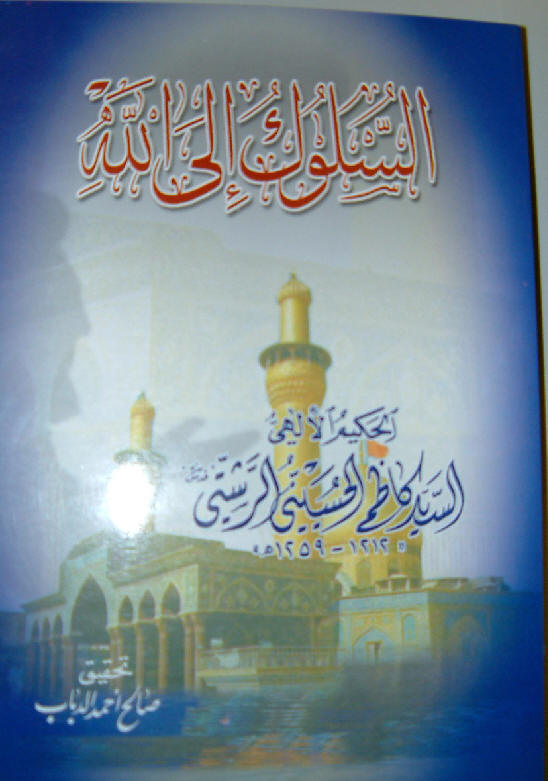
السير والسلوك الى الله
[Rasā'il] al-Sayyir wa'l-sulūk ilā Allāh ("The Journeying and the Pathway unto God")
...[by] Sayyid Kāẓim al-Ḥusaynī al-Ḥā'irī al-Rashtī,
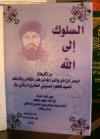
Arabic text (ed.) Āyāt-Allāh al-Ḥajji Mīrzā `Abd al-Rasūl al-Ḥā`iri al-Iḥqāqī Reprinted from Majmū`a al-Rasā'il li-l-Sayyid Kāẓim. [Kuwait] : Jā`mi al-Imam al-Muhammadādiq, 1421/2000.
192pp. consisting of a brief introd. to the life of Sayyid Kazim (pp.3-11),
the al-Sayyir wa'l-sulūk ilā Allāh (pp.12-91). Its authorship and date of composition, the 10th
Muḥarram 1243 / 3rd August 1827 CHECK THIS p.175-185 (= the Khuṭba al-Bāligha of Sayyid Kāẓim) pp.187-192 (Index). ADD
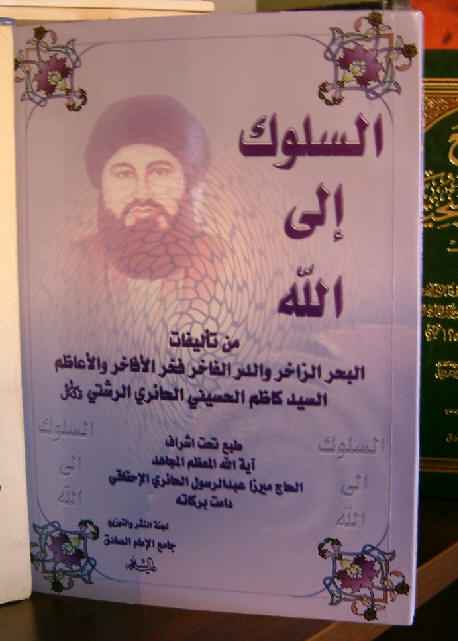
Another printing of Sayyid Kāẓim al-Ḥusaynī al-Rashtī's
al-Sulūk ilā Allāh (see above) is
that edited by Sāliḥ Aḥmad al-Dabbāb, (1st
printing) Beirut [Damascus]: Mu`assat Fikr al-Awḥad li'l-Taḥqiq wa'i-Ṭaba`at
wa'l-Nashr, 1423/2002, 160pp (incl. index = pp.157-60).
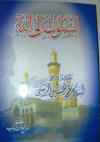
The text follows
some introductory, editorial notes including a chart of the abjad numerical
system (p. 12) and a two page reproduction of the opening and
ending of the autograph mss., (pp. 13-14) from p. 21ff. The text
printed here is apparently a reprint of the edition of Āyāt-Allāh Mīrzā `Abd al-Rasūl al-Ḥā`iri al-Iḥqāqī
(see above).
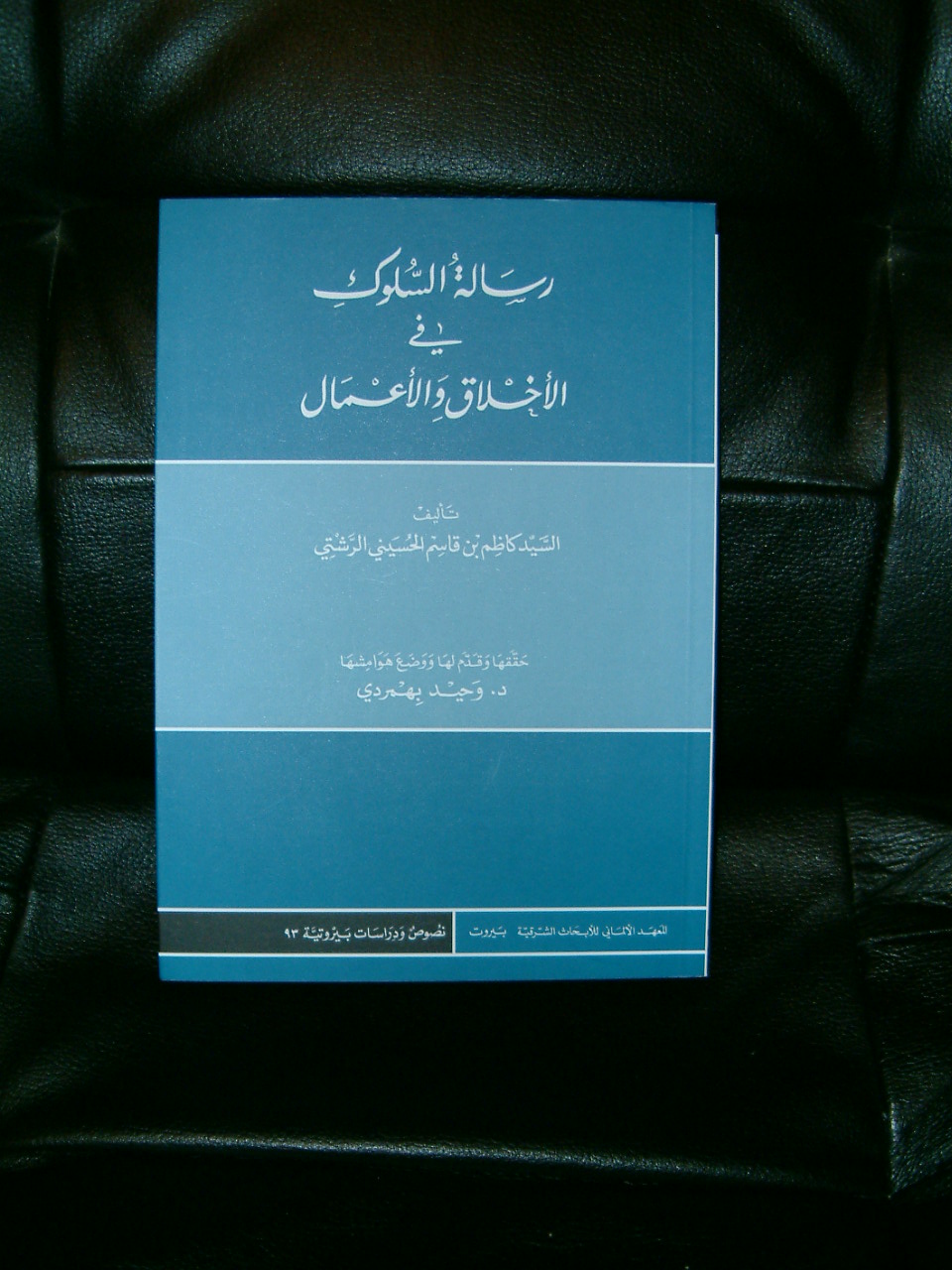
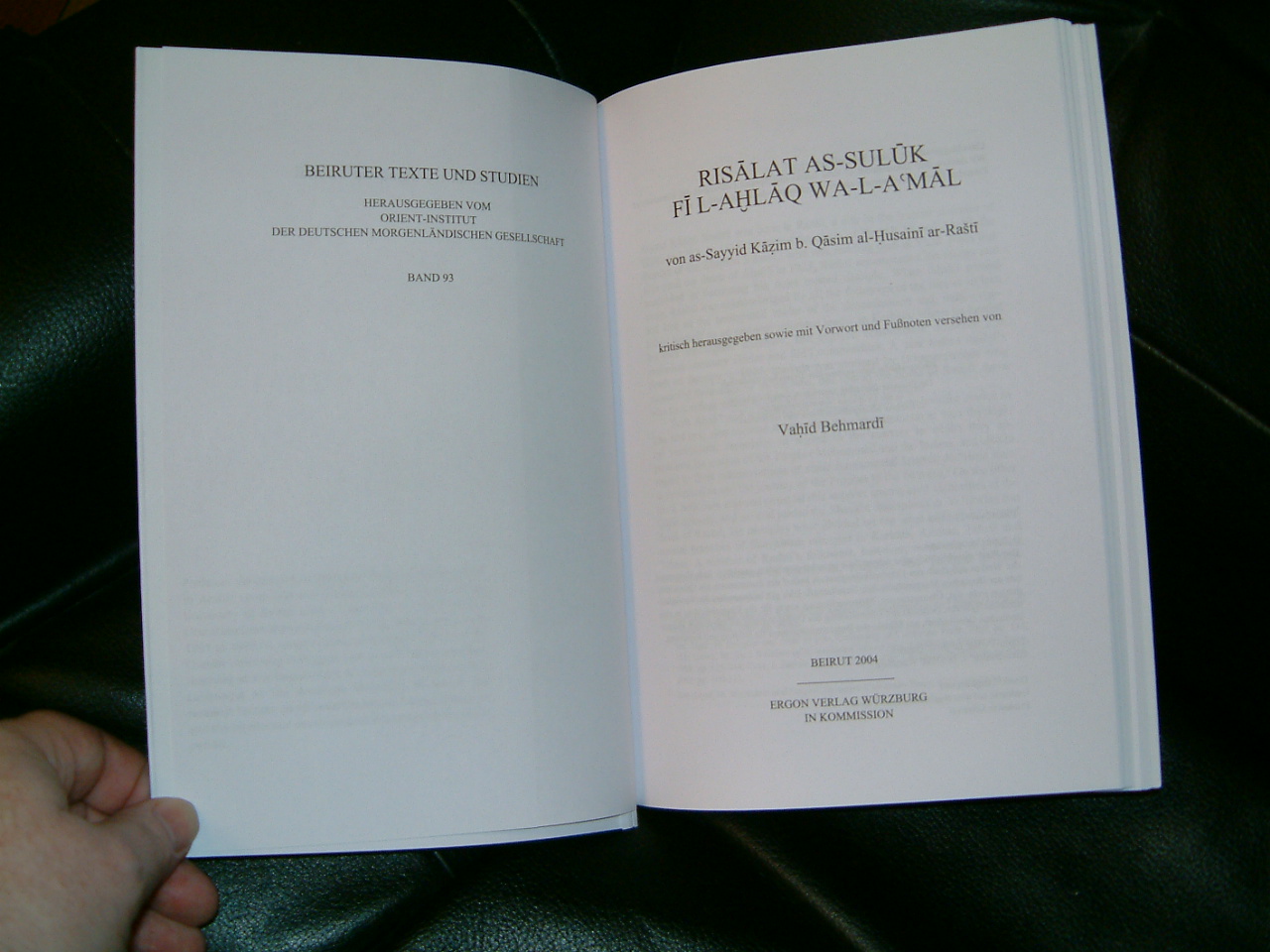
Behmardi, Vahid (ed.) Sayyid Kāzim b. Qāsim al-Ḥusaynī al-Rashtī,
An accomplished Arabist with a doctorate from the Univ. of
Cambridge (UK), Proff. Behmardi teaches at the Dept. of Arabic and Near
Eastern Languages at the American University of Beirut and specializes in
Abbasid Literature, Islamic Mysticism and Intellectual developments in Iran
during the Qajar period.
-
The first 30 or so pages (pp.9-40) of this excellent new
critical edition consist of a detailed introduction by Behmardi to the
aforementioned (loosely) `Treatise on the Ethics and Good Deeds
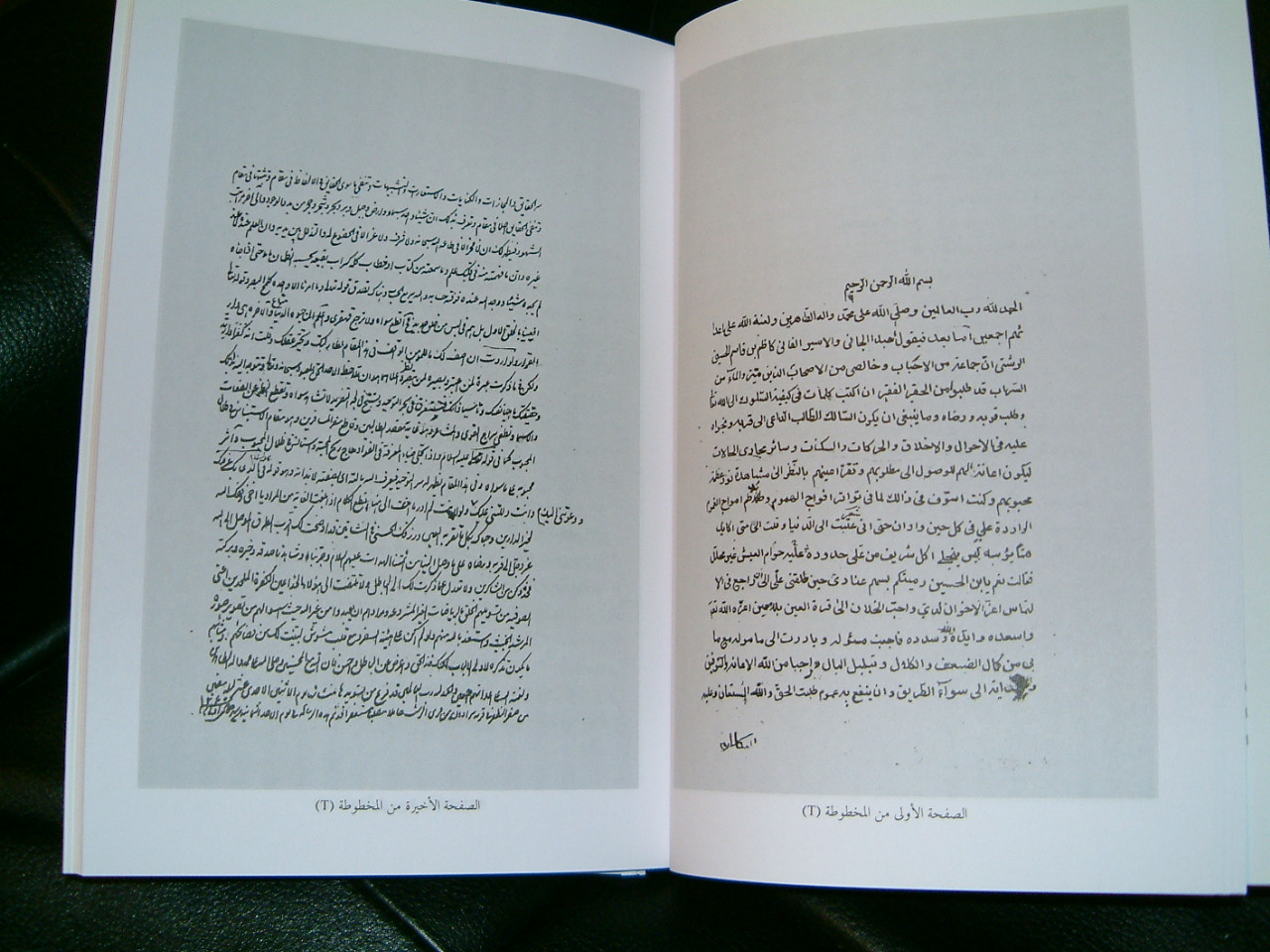
accompanying the [Spiritual] Path'. It is based upon 3 mss., one
in Behmardi's personal library and two in Princeton Univ. Library (see pp.
36-40 and the clear reproductions of the 1st and last pages between [unpaginated]
pp. 41-49). The Behmardi edition is printed from page 50-94 and is followed
by detailed annotations (pp. 95-113) and a bibliography of
sources cited and consulted (pp.115-120).
-
Behmardi does not give any details of the relationship of
his new critical edition and the various other Middle Eastern (Beirut
+ Kuwait) printings of Sayyid Kāẓim Rashtī's (other?) Arabic
treatise(s) entitled al-Suluk ilā Allāh (or the
like). The above two non-Behmardi editions are based on further Arabic
mss. and/ or printings...... See further the Ibrahami Fihrist trans SL. +
further details..
No. 89
(= 221, Fih.
317)
No. 90
(= 222, Fih.
317)
No. 91
(= 223, Fih.
318)
No. 92 (= 224, Fih.
318)
Part IV
: 318-321
Fihrist Nos. 225-240
(15 items)
Books and Treatises
pertaining to matters Uṣūlī (Foundational)
No. 93 (= 225, Fih.
318)
No. 94 (= 226, Fih.
318)
No. 95 (= 227, Fih.
318)
No. 96 (= 228, Fih.
318)
No. 97 (= 229, Fih.
319)
No. 98
(= 230, Fih.
319)
No. 99 (= 231, Fih.
319)
No. 100
(= 232, Fih.
319)
No. 101 (= 233, Fih.
319)
No. 102
(= 234, Fih. 319)
No. 103 (= 235, Fih.
320)
No. 104 (= 236, Fih.
320)
No. 105 (= 237, Fih.
320)
No. 106 (= 238, Fih.
320)
No. 107
(= 239, Fih.
320)
No. 108 (= 240, Fih.
321)
Part
V : 321-329
Fihrist
Nos. 241-264 (23 items).
Books and Treatises
pertaining Fiqh (Legal matters, Jurisprudence).
No. 109 (= 241, Fih.
321)
No. 110 (= 242, Fih.
321)
No. 111 (= 243, Fih.
321)
No. 112 (= 244, Fih.
321)
No. 113 (= 245, Fih.
321)
No. 114 (= 246, Fih.
321)
No. 115 (= 247, Fih.
322)
No. 116 (= 248, Fih.
322)
No. 117 (= 249, Fih.
322)
No. 118 (= 250, Fih.
322)
No. 119 (= 251, Fih.
322)
No. 120 (= 252, Fih.
322)
No. 121 (= 253, Fih.
323)
No. 122 (= 254, Fih.
323)
No. 123 (= 255, Fih.
323)
No. 124 (= 256, Fih.
323)
No. 125 (= 257, Fih.
323)
No. 126 (= 258, Fih.
323)
No. 127 (= 259, Fih.
324)
No. 128 (= 260, Fih.
324)
No. 129 (= 261, Fih.
324)
No. 130 (= 262, Fih.
324-329)
No. 131 (= 263, Fih.
329)
No. 132 (= 264, Fih.
329)
Part
VI: 230-231
Books and Treatises
pertaining to Tafsīr (Qur'an Commentary).
Fihrist Nos. 265-272 (8 items).
No. 133
(= 265, Fih.
330)
No. 134
(= 266, Fih.
330)
No. 135
(= 267, Fih.
330)
No. 136
(= 268, Fih.
330)
No. 137
(= 269, Fih.
330)
No. 138
(= 270, Fih.
331)
تفسيراية
الكرسى
Tafsīr āyat al-kursī ("Commentary on the Chair [Throne] Verse" = Q. 2:255).
Apparently written in 7,500 verses when SK was 20 years
old. There exists an old lithograph edition. The autograph mss. in not found. A mss. copy can be found in
ADD
شرح آية الكرسي
من مصنفات السيد الاجل الاوحد
المرحوم
السيد كاظم بن السيد قاسم الحسيني الرشتي اعلي الله مقامه
Following the prescript, this work opens as follows:
بسم الله الرحمن الرحيم
The Commentary upon the "Throne Verse"
(Āyat al-kursī = (Q. 2:255) from the compositions of the most glorious and unique, the late Sayyid Kāzim
ibn Sayyid Qāsim al-Ḥusaynī al-Rashtī, (may God make his station sublimely transcendent).
In the Name of God, the Merciful, the Compassionate.
الحمد لله الذي اجلي افئدة العارفين لتجليات ظهوره و
انار قلوب السالكين لاشراقات نوره و شرح صدور العالمين لتشعشع
لمعات بدوره و الصلوة
علي سيدنا محمد الذي به استقر عرشه
و كرسيه و هو الاسم الذي استقر في ظله فلايخرج
منه الي
غيره و هو الاسم الاعظم المكنون و النور الانور المخزون به نورت الانوار و
به ظهرت الاسرار و به اشرق النور من صبح الازل و به وجدت
الموجودات ما قل و جل و
علي آله و اصحابه شموس الهدي و
بدور الدجي و اعلام التقي و ذوي النهي و اولي الحجي
و كهف
الوري و ورثة الانبياء عليهم صلوات الله ما دامت الارض و السماء
.
Praised be unto
God Who shed the splendor of His radiance upon the inmost hearts of the mystic knowers so as to actualize the disclosure of the orient lights of His theophany. He set ablaze
the hearts of the mystic wayfarers through the orient splendors of His Light
and explicated the inner retreats [bosoms] of all the worlds for the purpose
of dazzlingly illuminating the radiances of His cyclic schemata.
And
blessings be upon our Master [Sayyid] Muhammad through whom He settled down
upon His Throne (`arsh) and His Seat (kursi) for he is the Name through
the shadow of which eyes were solaced. Wherefore there did not emerge
from before me aught save what is of Him for he [Muhammad] is the Hidden,
Mightiest Name (al-ism al-a`zam) and the Light of Lights treasured up, the
very one
through whom the Lights found illumination. Through him were
mysteries disclosed and Light irradiated from the Dawn of Eternity (subḥ al-azal).
And through it him did all existence find realization....
No. 139
(= 271, Fih.
331)
No. 140
(= 272, Fih.
331)
Part
VII: 331-359.
Nos. 273-304
(31 items).
Books and Treatises
written
in reply to diverse questions.
No. 141
(= 273, Fih.
331-2)
Risāla in reply to [13 questions of]
Mirza Ibrahim Shirazi :
Q. 1. About the meaning of the two
kinds of prophethood (nubuwwatayn) and wilāya (wilāyatayn) [imamology]
and the differences between the
Q. 2. About the hadith
(tradition) of the Prophet regarding the ḥawl al-qudra
(circumstances of fate-destiny)...
Q. 3. On the meaning of the
passage in the Du`ā-yi Ṣabāḥ (Dawn Supplication), "O Thou whose
testimony pertaining to Thine Essence is by virtue of Thine Essence
(`ala dhatihi bi-dhatihi).
Q. 4. On the reality of
Gabriel (jibril) and the meaning of
Q. 5. On the meaning of the
elevated angels (malā'ika-i `aliyyīn) and the proof of their existence
from the Book and the traditions.
Q. 6. On the reality of the
Holy Spirit (rūḥ al-quds).
Q. 7. On the meaning of tafwīḍ
("grace") that is mentioned in the traditions (khabar).
Q. 8. About the question of
iṣmat (infallibility) and its reality.
Q. 9.
Q. 10.
Q. 11.
Q. 12.
Q. 13.
No. 142
(= 274, Fih. 332)
No. 143
(= 275, Fih. 333)
No. 144 (= 276, Fih.
333-6)
Risāla in reply to [33 questions of]
Sayyid Husayn Qaṭīfī
1, 400 verses in length.
Q. 1. About the meaning of the
statement of His Holiness [Imam Ja`far] Sadiq, upon him be peace, in
commentary upon the [qur'anic] verse, "
Q. 2. About the hadith
(tradition) in the Tafsir (commentary) upon the verse
Q. 3. On the meaning of the
statement of the Imam (upon him be peace)
Q. 4. Are the believers (mu'minin)
in the Paradise of the Barzakh (jannat-i barzakh) subject to marriage (tanākih)
or [some kind of] union (tazāvij)?
Q. 5.
Q. 6.
Q. 7.
Q. 8.
Q. 9.
Q. 10.
Q. 11.
Q. 12.
Q. 13.
Q. 10.
Q. 11.
Q. 12.
Q. 13.
Q. 14.
Q. 15.
Q. 16.
Q. 17.
Q. 18.
Q. 19.
Q. 20.
Q. 21.
Q. 22.
Q. 20.
Q. 21.
Q. 22.
Q. 23.
Q. 24.
Q. 22.
Q. 26.
Q. 27.
Q. 28.
Q. 29.
Q. 30.
Q. 31.
Q. 32.
Q. 33.
No. 145
(= 277, Fih.
336)
Risāla in reply to [questions of]
Shaykh Sulaymān Musqaṭī :
Mentioned in the small Fihrist (fihrist-i
kuchik). No details given.
No. 146
(= 278, Fih.
336-7)
Risāla in reply to [the ten or so
questions of] Mirza Shafi` Mazandaranī :
(800 verses)
Q. 1.
Q. 2.
Q. 3.
Q. 4.
Q. 5.
Q. 6.
Q. 7.
Q. 8.
Q. 9.
Q. 10.
No. 147 (= 279, Fih.
337-8)
No. 148 (= 280, Fih.
338)
No. 149 (= 281, Fih.
338-340)
No. 150 (= 282, Fih.
341)
No. 151 (= 283, Fih.
341)
No. 152 (= 284, Fih.
341)
No. 153 (= 285, Fih.
342-347)
No. 154 (= 286, Fih.
347)
No. 155 (= 287, Fih.
347)
No. 156 (= 288, Fih.
348)
No. 157 (= 289, Fih.
348-9)
No. 158 (= 290, Fih.
349-50)
No. 159 (= 291, Fih.
350)
No. 160 (= 292, Fih.
350-2)
No. 161 (= 293, Fih.
352)
No. 162 (= 294, Fih.
352)
No. 163 (= 295, Fih.
353-4)
No. 164 (= 296, Fih.
354-5)
No. 165 (= 297, Fih.
355-7)
No. 166 (= 298, Fih.
357)
No. 167 (= 299, Fih.
357)
No. 168 (=
300, Fih.
358)
No. 169 (=
301, Fih.
358)
No. 170 (=
302, Fih.
358-9)
No. 171 (=
303, Fih.
359)
No. 172 (=
304, Fih.
359)